- Why do women have migraine?
- Causes for migraine in women
- Living with migraine as a woman
- Drug-free migraine relief options
Did you know that migraine is three times more common in women than in men? It’s a leading cause of disability in women worldwide.
“No other disease, communicable or non-communicable, is responsible for more years of lost healthy life in young women, notwithstanding that migraine causes no premature mortality,” a team of researchers wrote in The Journal of Headache and Pain.
To say the same thing in plain language: While migraine won’t kill you, it makes life really, really hard for women.
Why do so many women have migraine?
Why does migraine affect women more often than men? The answer’s not fully understood, but the primary cause of migraine in women is believed to be hormones — specifically, estrogen.
In the late luteal phase of the menstrual cycle (which occurs right before you get your period) both estrogen and progesterone decline. In women with migraine, the change in estrogen is accelerated. That decline is believed to trigger migraine attacks. “Some women seem to be more susceptible to this effect, some less, but we see this in the majority of women with migraine,” Dr. Jelena Pavlović explained at the 2022 Migraine World Summit. Dr. Pavlović is an associate professor of neurology at Albert Einstein College of Medicine and attending neurologist at the Montefiore Headache Center.
Migraine attacks may grow more frequent but less predictable in perimenopause, when hormones fluctuate. In menopause, which occurs, on average, at age 52, many women find that their migraine attacks decrease in frequency and severity. Other women, however, continue to struggle with migraine as they age. It’s frustrating, Dr. Pavlović said. “You know, by age 52, there’s been many years of migraine and a lot of suffering and just the frustration of failed treatment.”
90-day money back guarantee FDA-cleared financing availableGet Drug-Free Migraine Relief With CEFALY
Shop Now 




In-depth: causes for migraine in women
One primary cause of migraine in women is hormonal fluctuations, especially changes in estrogen and progesterone. Estrogen plays a key role in regulating neurotransmitters like serotonin, which influence pain pathways. When estrogen levels drop—such as just before menstruation—it can disrupt this balance and trigger migraine attacks. This is why menstrual migraine attacks are common and often more severe than non-hormonal migraine. Progesterone also interacts with estrogen, and its relative levels can influence migraine as well.
Life stages like pregnancy, postpartum, perimenopause, and menopause further complicate migraine patterns. Pregnancy—especially the second trimester—brings relief for many women because estrogen levels stabilize. However, some pregnant women find that migraine gets worse. Complicating matters, many migraine medications are not safe to use during pregnancy. That makes managing migraine in pregnancy more complicated.
The postpartum period can be challenging; estrogen drops sharply after delivery, which may trigger migraines unless breastfeeding helps maintain hormonal steadiness. In perimenopause, hormone levels fluctuate unpredictably, often worsening migraine frequency and intensity.
Learn more: How to Manage Migraine in Perimenopause and Menopause
Birth control pills and hormone therapies can also influence migraine patterns, either by stabilizing hormones or introducing new fluctuations. It’s important to monitor symptoms when starting or changing these medications.
Living with migraine as a woman
Did you know that female symptoms of migraine may feel more intense, compared to migraine in men? Women are more likely to:
- Experience longer and more intense migraine attacks
- Have more migraine symptoms, including nausea, visual aura, blurred vision, light and sound sensitivity
- Have serious migraine-related disability that affects productivity at school or work
The days lost to migraine pain are days you can never get back. If migraine pain is constricting your life, now’s the time to take action so you can reduce the frequency of attacks and find pain relief that works.
- Consult a headache specialist/neurologist. Did you know that most migraine patients (70.3%) predominantly use primary care to treat migraine? Your primary care doctor is a good place to start, but if migraine has a significant impact on your life you should see a provider who specializes in headache care. They can discuss the causes of migraine—for women in general as well as your unique triggers—and develop a migraine treatment plan that may include medication and drug-free options, such as CEFALY.
- Talk to your OB/GYN, too. If you have hormonal migraine, your OB/GYN may be able to advise you on whether hormonal birth control or hormone replacement therapy (in menopause) can help.
- Keep a migraine diary. With migraine, knowledge is power. The more you know about your personal triggers and migraine patterns, the more effective your treatment plan can be. Download the CeCe Migraine Management app to log migraine attacks; track triggers, symptoms and treatments; and generate reports on your unique migraine patterns. You can also use CeCe to control your CEFALY Connected!
- Assemble your migraine toolkit. A migraine toolkit is a collection of migraine relief products you personally find to be helpful. It might include simple comforts, such as ice packs or a favorite pillow. It can also include migraine treatments, such as prescription medications and your CEFALY.
- Build a migraine support network. Life is easier when you have migraine allies: people who understand what you’re dealing with, who support you and who can speak on your behalf.
- Mentally reframe the battle. Living with menstrual migraine is debilitating and disheartening, because you know the pain will return again and again. Dr. Pavlović recommends adopting this mindset: “I have mastered [migraine] because I know when it’ll happen. And I have tried these different treatments, and I have found one that works for me during this time. And I am willing to take it and to proactively treat, rather than wait and be at the mercy of it.”
Safe, drug-free relief options for women with migraine
If migraine medication isn’t working for you, or if you’re unable to take medication because of drug interactions or side effects, then it’s time to consider drug-free remedies.
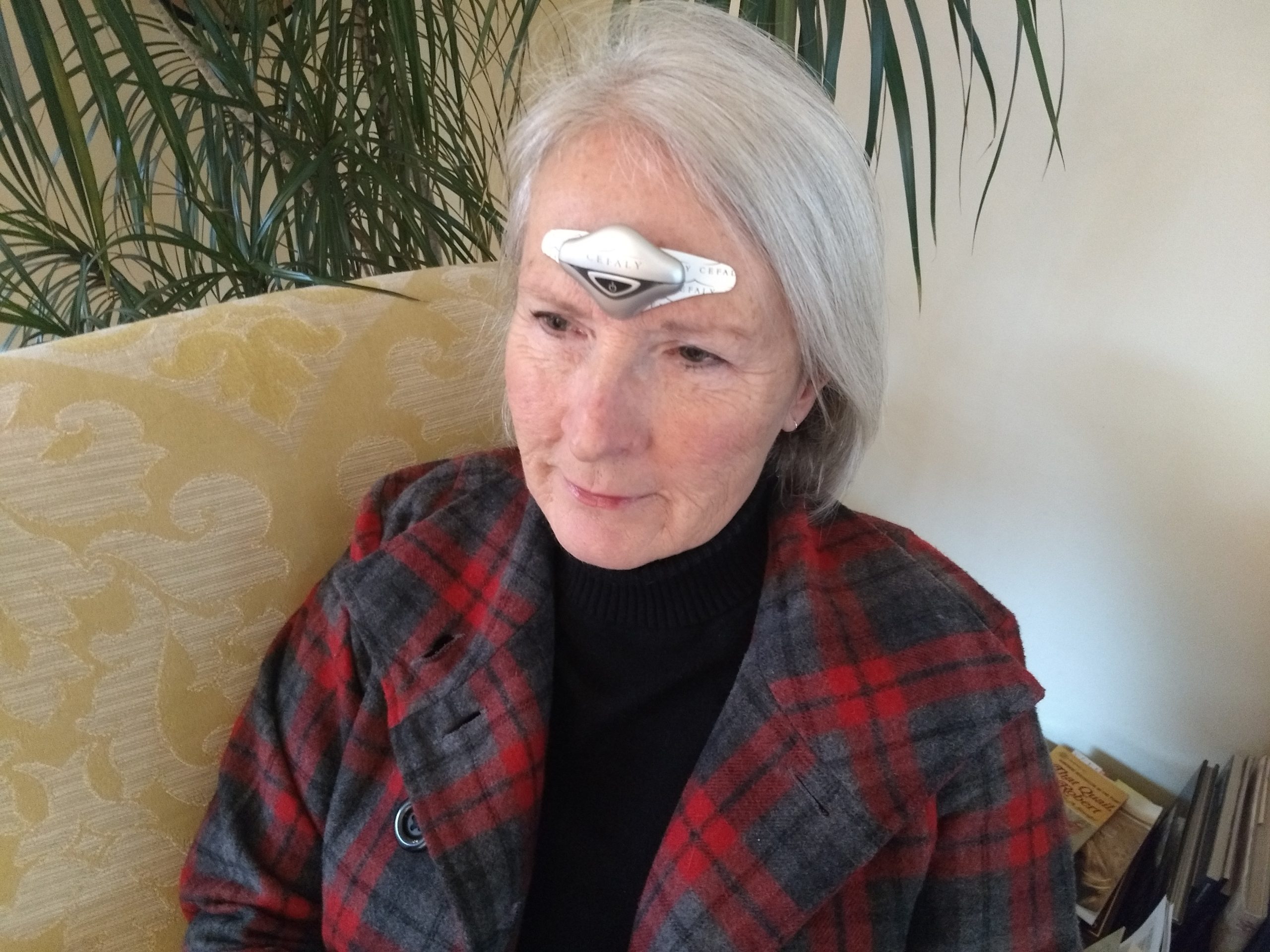
CEFALY is an FDA-cleared/CE marked, non-invasive medical device that works to treat and prevent migraine.
- ACUTE, a 60-minute program for acute migraine relief, targets the trigeminal nerve to block pain signals from getting through.
- PREVENT, a less intense program that’s used for 20 minutes each day, desensitizes the nerve over time to reduce your number of migraine days.
Because the experience of migraine can be so different from person to person, many women try different combinations of treatments until they find the one that works best for them. CEFALY is drug-free and has minimal, mild side effects, so it can be used in conjunction with other migraine remedies.
Try CEFALY for Migraine Relief
Don’t lose any more days to migraine.
Reclaim your life! Try CEFALY risk free for 90 days. If you’re not satisfied with the results, simply return the device and accessories for a refund. Read our return policy.
Ready to experience migraine relief with CEFALY?
Reviewed by: Deena E. Kuruvilla, MD, a board-certified neurologist and the director of the Westport Headache Institute, where she employs a holistic biopsychosocial approach to diagnosis and treatment. She held clinical appointments at the Yale University School of Medicine prior to starting her own practice and has authored many articles, book chapters, and research publications.