Fewer Dizzy Days Ahead
Living with migraine often means fighting two battles: the battle to function and feel better, and the battle to be heard. For people with vestibular migraine, dizziness can be the loudest symptom in the room. We sat down with Dr. Paige Day, PT, DPT — a certified vestibular specialist and founder of The Dizzy Doctor, a vestibular rehabilitation and wellness practice — to talk about what vestibular migraine is, why it’s so often misunderstood, and the practical strategies she uses to help people feel steadier.
“Just stay strong and know that your symptoms don’t have to be as bad as they are forever. There are fewer dizzy days ahead, and I always tell that to everybody. … And that combination of vestibular rehab and using CEFALY can be a really, really great way to get you there.” — Dr. Paige Day
What is vestibular migraine?
Vestibular migraine is a central vestibular disorder, meaning it involves the brain and brainstem pathways that process balance and motion, rather than the inner ear structures alone. Many features may mirror a “classic” migraine attack (like sensitivity to light or sound, visual aura, or head pain), but dizziness is a defining piece.
People describe dizziness differently: feeling “floaty,” like walking on marshmallows or a trampoline, a “full” or “pop rocks” sensation in the head, or simply feeling off. Not everyone has head pain during attacks, which is one reason vestibular migraine can be missed.
If dizziness is a repeating theme in your migraine pattern — even between attacks — it’s worth exploring the possibility of vestibular migraine with a knowledgeable clinician.
Why vestibular migraine hits so hard in the 20s–50s (especially for women)
Dr. Day sees many women in their 20s to 50s navigating intense seasons of life — hormonal shifts, caregiving, career growth, and constant multitasking. When a sensitive nervous system meets chronic stress and overstimulation, vestibular symptoms can escalate.
Think of the vestibular system as a sixth sense, she says: When the brain is already hypersensitive and life is unpredictable or overloaded, dizziness can become more pronounced.
Get Drug-Free Migraine Relief With CEFALY
Shop Now

90-day money back guarantee

FDA-cleared

financing available
Getting to the right diagnosis can take time
Vestibular migraine is a clinical diagnosis — there isn’t a single blood test or scan that confirms it. People often see multiple providers before they land on the right name for what they’re experiencing. Education and awareness matter. Knowing that not all migraine attacks include head pain helps more people recognize themselves in the description and seek care that fits.
If this sounds familiar: Keep notes on your symptoms and patterns, bring them to your appointments, and ask about vestibular migraine specifically. You deserve to be heard and taken seriously.
Dr. Paige Day’s “triad of care” for vestibular migraine
There’s no one-size-fits-all plan. Dr. Day often recommends a three-pronged approach tailored to each person:
- Neurology
For those who want to explore prescription options, a neurologist or headache specialist can help evaluate and manage medications. - Vestibular rehabilitation
Guided by a vestibular physical therapist, rehab can gently retrain the brain’s response to motion and visual environments. It’s not about “pushing through” symptoms — it’s about habituation and nervous system reassurance at a pace that respects your limits. Dr. Day also incorporates lifestyle changes, specifically stress relief techniques. - Counseling / CBT
Migraine and dizziness affect mental health, and vice versa. Cognitive behavioral therapy and related approaches can help reduce the “dizzy-anxious cycle,” process past medical trauma, and build resilience tools.
“I always say, if you weren’t anxious about your symptoms, I would be more concerned about you because it feels awful … These symptoms are real and helping validate them is important.” — Dr. Paige Day
Everyday tools that help you feel steadier
1) Somatic tracking (nervous system check-ins)
Many of us are overloaded and rarely pause to ask, What does my body need right now? Dr. Day teaches brief, regular check-ins to lower threat signals and restore a sense of safety.
- Start lying down on a stable surface to maximize grounding input (pressure, contact, warmth).
- Notice sensations without judgment; name what’s present (“I feel floaty,” “My shoulders are tight”).
- Offer support: dim lights, lessen visual input, slow breathing, sip water, stretch gently. If a patient is experiencing head pain as well, Dr. Day will incorporate a CEFALY treatment.
- With practice, adapt this to your office chair or a quiet corner, making it a short and doable routine anywhere.
2) Predictability helps a sensitive brain
“Vestibular migraine likes predictability,” Dr. Day says. Regular wake/sleep times, meals, movement, and breaks give your nervous system consistency. When travel or big events disrupt routines, plan both ends: prepare for the trip, and schedule a gentler re-entry (fewer emails, lighter commitments the day after).
3) Visualization (mental rehearsal)
The brain responds to imagined practice. Before a flight, crowded store, or new workplace layout, picture yourself moving through it calmly and successfully, step by step. When the real moment arrives, your brain treats it as more familiar, reducing the “danger” signal that can amplify dizziness.
Where neuromodulation fits and how Dr. Paige Day uses CEFALY
On days when a person comes to the clinic with an active vestibular migraine attack, provoking more dizziness in the clinic isn’t the goal. That’s when Dr. Day reaches for non-medication tools to calm the system — sensory grounding, somatic tracking, quiet — and neuromodulation with CEFALY.
She recently used the device with a patient who’d had a long stretch of head pain; afterward, he reported several pain-free days. Results vary, of course, but moments like this create hope and momentum.
From a patient’s perspective, the benefits of CEFALY include:
- Drug-free and non-invasive
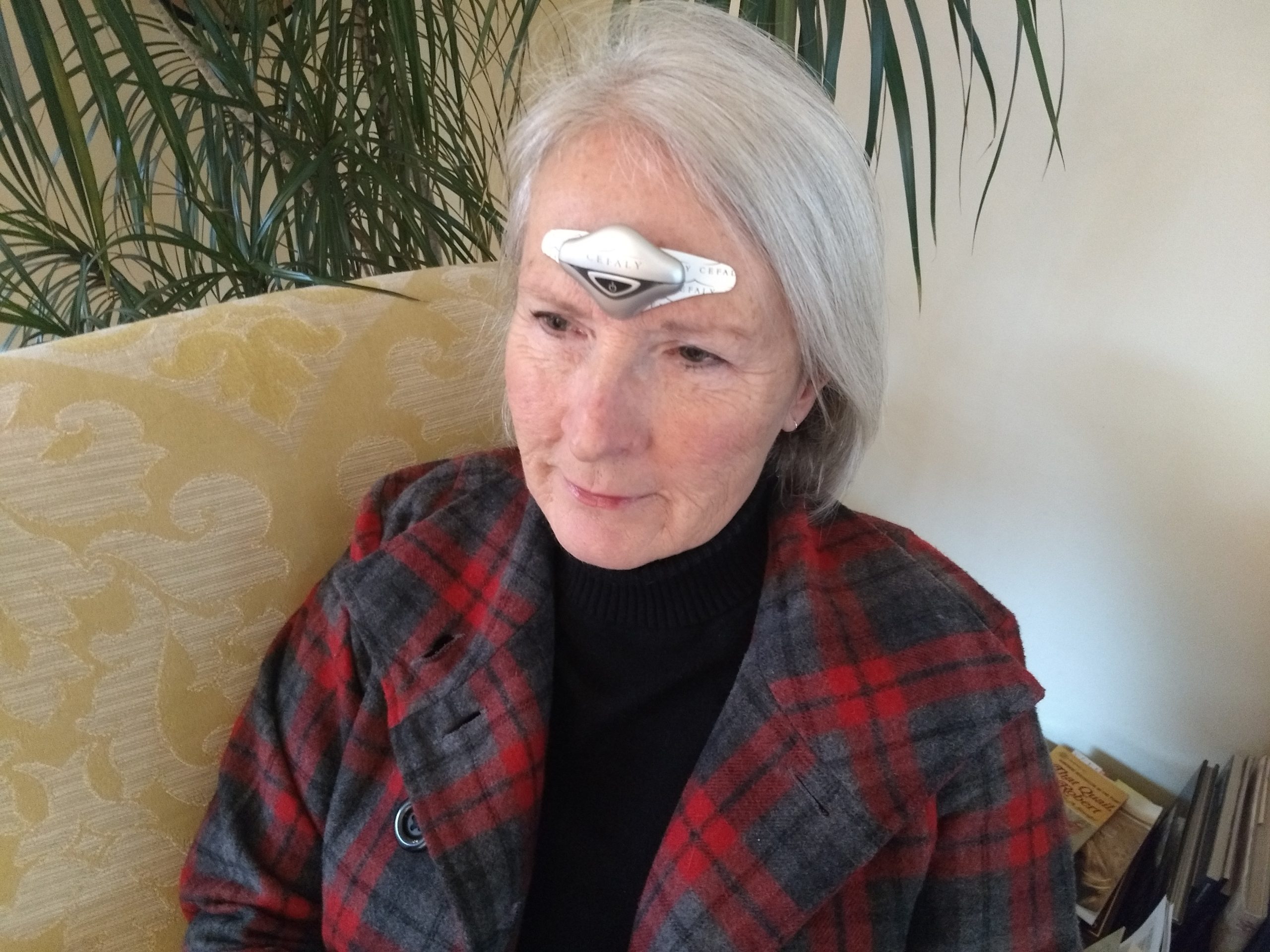
- Small and portable, making it easy to use at home, at work, and yes, even on a plane
- Can be used on its own or in tandem with medication. CEFALY is a helpful addition to a “migraine toolkit,” whether you’re reducing reliance on medications or pairing treatments for better control.
As always, discuss new treatments with your healthcare provider to make sure they fit your history and goals.
Feeling overwhelmed by vestibular migraine? Start here.
- One day at a time. Open a note on your phone, or use the CeCe Migraine Management app to track patterns you notice. These might include sleep, stress, sodium intake, screens, menstrual cycle phases, or environmental triggers.
- Seek supportive care. Look for a vestibular specialist (physical therapist) in your area and a clinician who understands migraine.
- Build your toolkit. Consider neuromodulation, grounding practices, gentle movement, and counseling support.
- Schedule something to look forward to. Joy and connection lower the nervous system’s guard.
“Take it one day at a time.” — Dr. Paige Day
Connect with Dr. Paige Day
- Instagram: @thedizzydr — her most active platform for education and community
- Website: the-dizzy-doctor.com
- Email: therapy@the-dizzy-doctor.com
She also offers online vestibular programs rooted in movement, mindset, and education for those outside the Omaha, Nebraska area.
Ready to explore neuromodulation?
CEFALY is a wearable, drug-free option that many people include in their migraine relief toolkit. It’s designed to be accessible and easy to use at home or on the go. If you’re curious, learn more about how it works and whether it may fit your care plan at cefaly.com — and talk with your healthcare provider about your options.
Get Drug-Free Migraine Relief With CEFALY
Shop Now
90-day money back guarantee
FDA-cleared
financing available
This article is for educational purposes only and is not medical advice. Every person’s migraine experience is unique; work with your healthcare provider to find a plan that’s right for you.